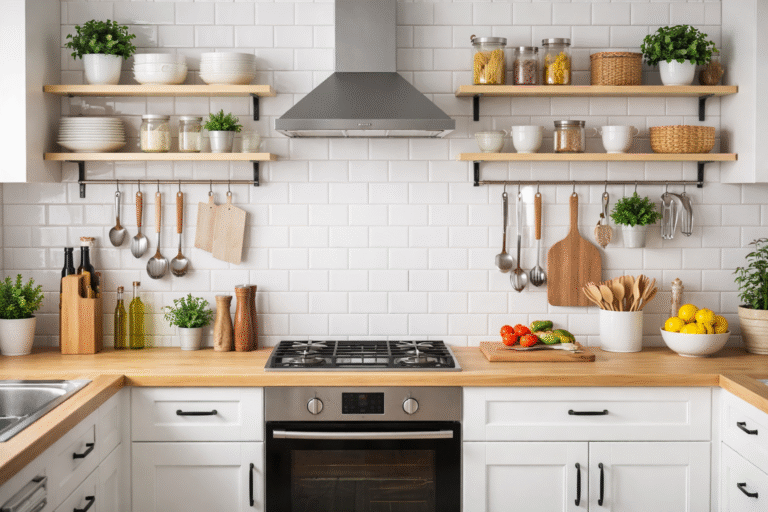
6 Reasons Why Cooking Takes So Long at Home (Powerful Fixes That Actually Work)
why cooking takes so long? Many people believe cooking takes too long because they lack time, tools, or skills. In reality, cooking feels slow because of small inefficiencies that repeat every single day. These inefficiencies add friction, break focus, and drain energy—especially in busy households.
In this article, we’ll break down why cooking takes so long and show you practical ways to fix it without spending money or buying new gadgets.
Starting Without a Clear Cooking Plan
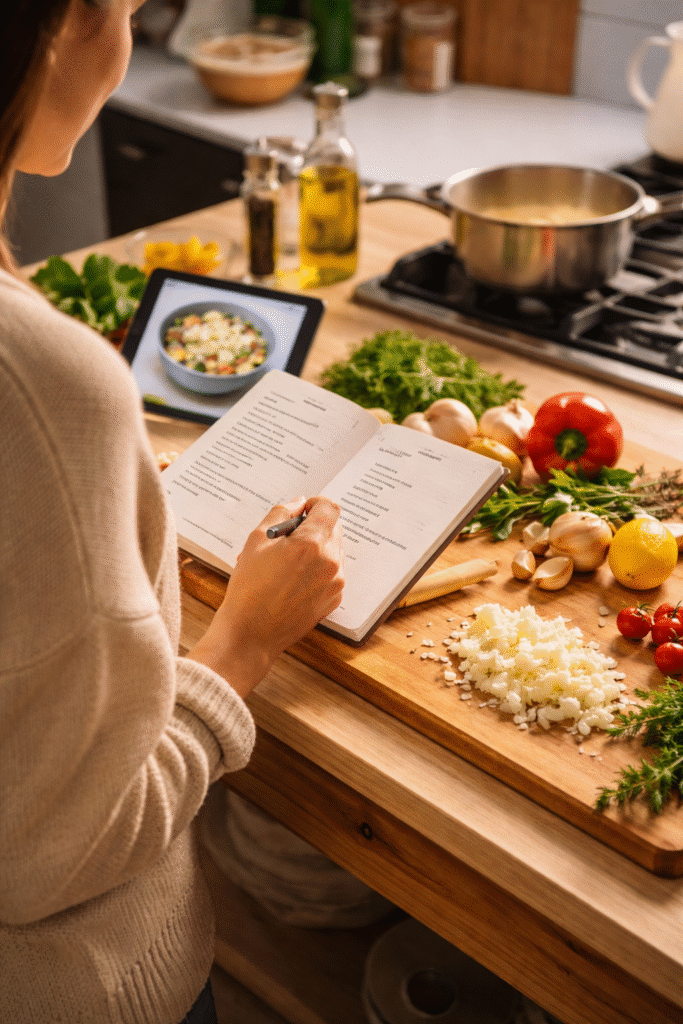
Why cooking often feels slow because it starts without a Clear Cooking Plan
Wasting Time Searching for Ingredients Mid-Cooking. When you don’t know the steps in advance, you pause repeatedly to think, search, and decide. These pauses stretch cooking time far more than people realize.
A simple mental plan—or even a quick glance at the recipe—before starting helps cooking flow smoothly and finish faster. This is exactly why cooking takes so long in most homes. Without a plan, the brain constantly switches between decision-making and action. These mental switches slow everything down. Even professional chefs plan steps mentally before touching ingredients. Experts recommend following a professional cooking workflow to reduce unnecessary delays and improve kitchen efficiency.
Wasting Time Searching for Ingredients Mid-Cooking
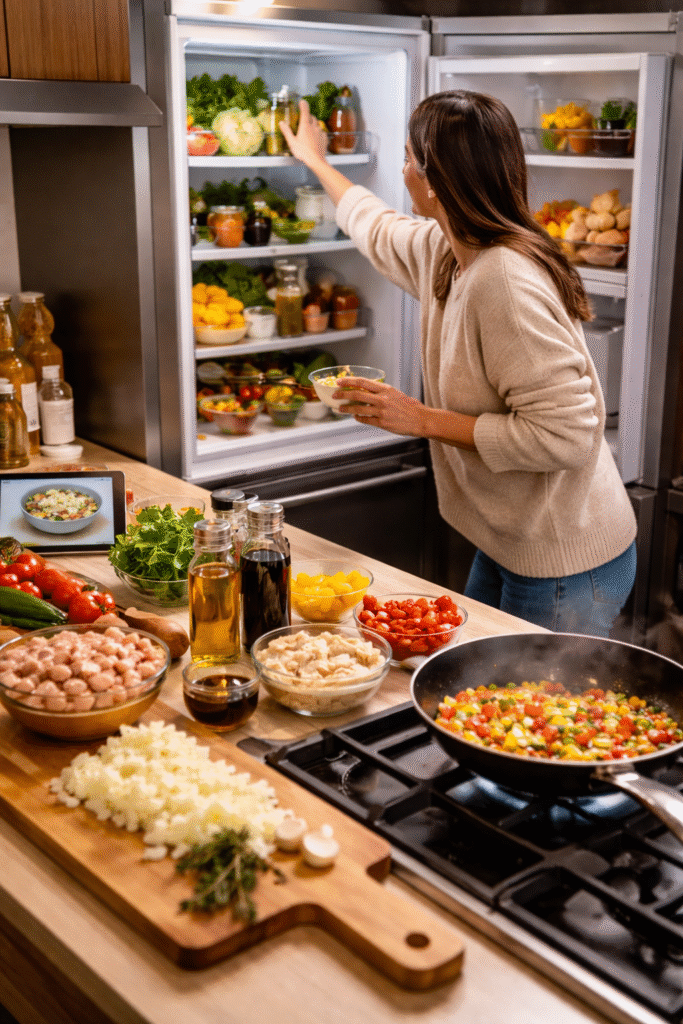
Opening and closing cabinets while food is on the stove breaks focus and increases mistakes. This is one of the biggest hidden reasons cooking drags on.
Placing all ingredients on the counter before starting reduces interruptions and keeps you in control of the process. This habit is one of the most common reasons why cooking takes so long at home. Every interruption increases the chance of forgetting steps or overcooking food. Setting ingredients in one place before starting creates momentum and keeps cooking smooth from start to finish.
Multitasking Without a Cooking Sequence
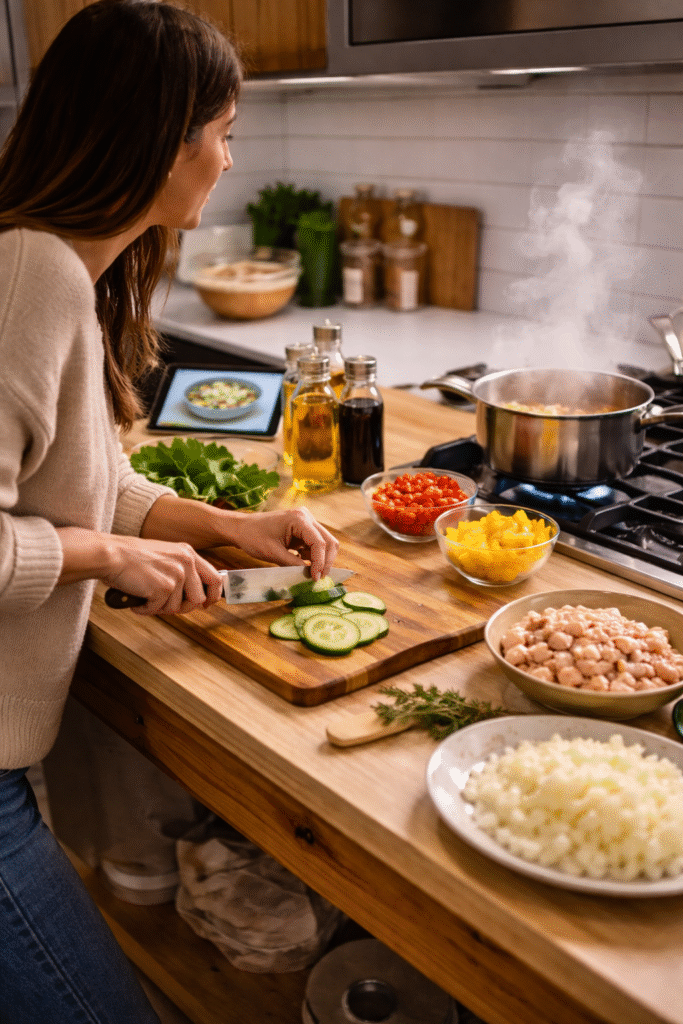
Many people multitask randomly—washing vegetables while something burns or cleaning while chopping. This creates chaos instead of efficiency.
Cooking becomes faster when tasks are sequenced logically, not done simultaneously without order. Efficient cooking is not about doing everything at once. It is about doing the right task at the right time. When tasks are sequenced—prep first, cooking second, cleaning last—meals come together faster with less stress and fewer mistakes.
Using the Same Cooking Style for Every Meal
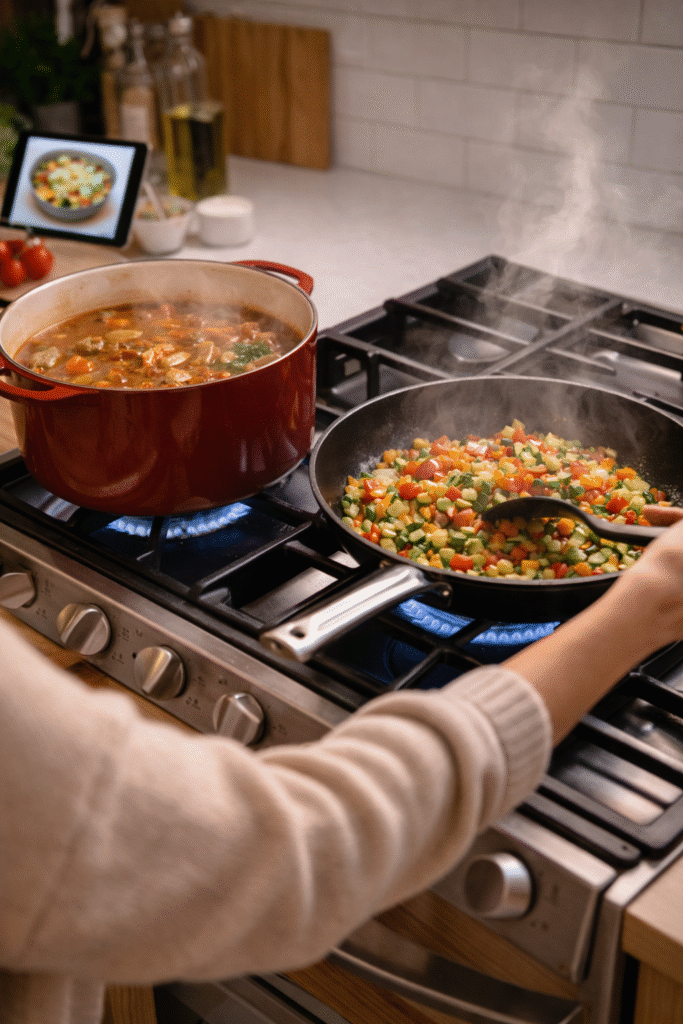
Some meals require slow cooking, while others are meant to be quick. Treating every dish the same increases time unnecessarily.
Knowing when to use fast-cooking methods like sautéing or pressure cooking helps reduce daily cooking time significantly. Understanding cooking methods plays a big role in reducing time. Quick meals benefit from high-heat methods, while slow-cooked dishes require patience. Matching the method to the meal prevents unnecessary delays and frustration in everyday cooking.
Poor Ingredient Visibility in Storage Areas
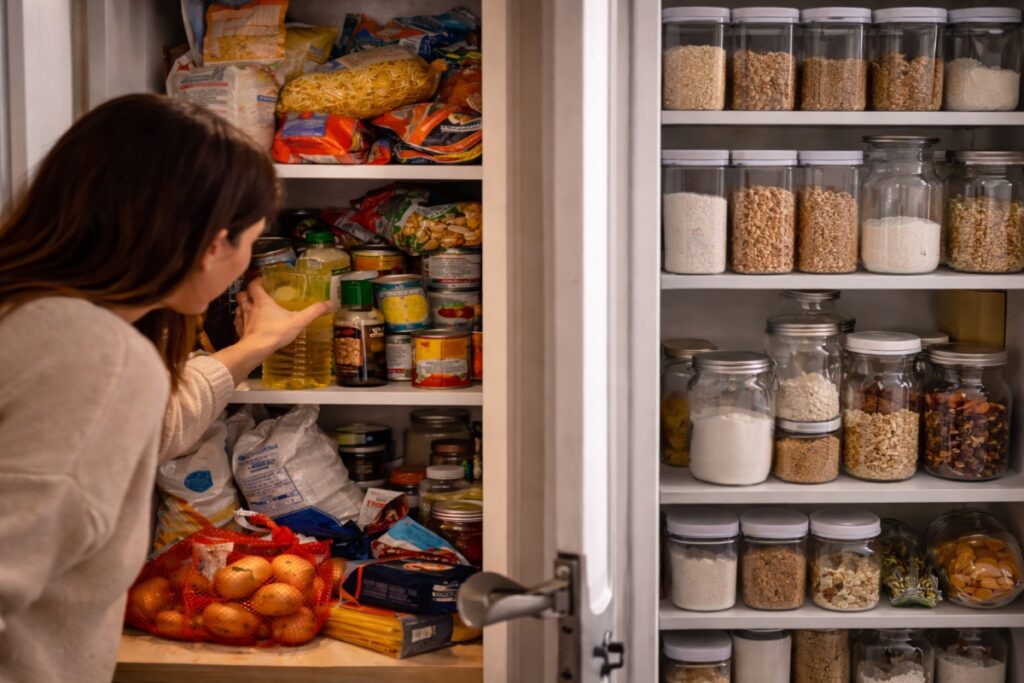
When ingredients are hidden behind clutter, people forget what they already have and waste time searching.
Clear containers and visible storage reduce hesitation and speed up meal prep. Poor visibility is another hidden reason why cooking takes so long. When ingredients are hard to see, people hesitate, double-check, and second-guess themselves. Clear storage makes decisions faster and reduces wasted movement during meal prep.
Repeating the Same Mistakes Every Day
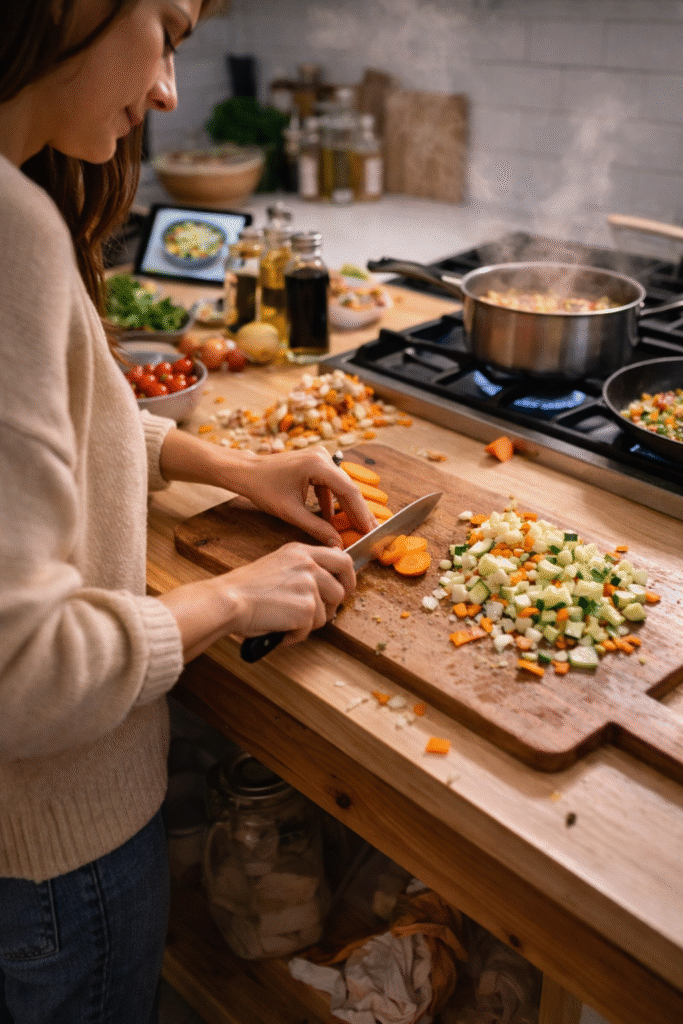
Many people unknowingly repeat the same slow habits daily—cutting vegetables inefficiently, overcleaning during cooking, or overthinking simple steps.
Once these patterns are identified, cooking naturally becomes faster without extra effort. Once slow habits become routine, they feel normal. The key to faster cooking is awareness. When small inefficiencies are corrected, cooking speed improves automatically without effort or expense.
If you want to fix daily kitchen slowdowns, also read 7 kitchen Organization Mistakes That Waste Time Every Day.